Real-time AUTOMATION · CLINICAL WORKFLOW
Sequencing the three-way call
Redesigned interpreter call coordination with sequential automation—optimizing for both speed and cost.
ROLE
Product Design Intern
TEAM
1 PM, 2 Engineers
TIMELINE
Aug - Nov 2022
PROBLEM
The high cost of manual coordination
Initiating a consult with a third-party interpreter was a fragmented ordeal. Our platform had an autodialer for patient calls, but interpreter coordination remained manual. Doctors juggled the web interface and phone calls simultaneously—a workflow that was time-consuming and prone to failure.
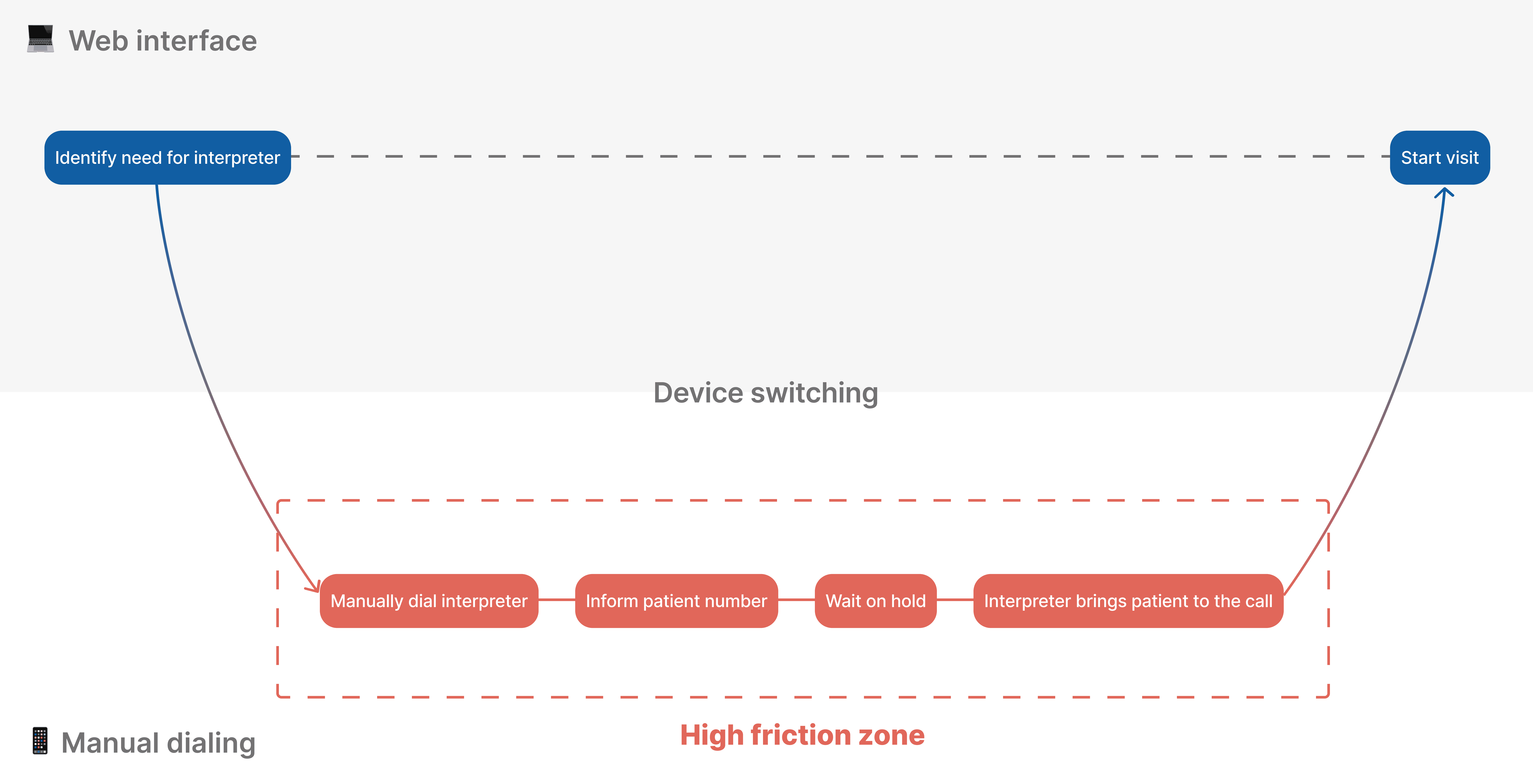
01 The coordination burden
Physicians juggled multiple interfaces and devices simultaneously. Each setup was slow and error-prone - one dropped connection meant starting over. For back-to-back appointments, this friction compounded throughout the day.
02 The billing inefficiency
Interpreters bill by the minute from connection. In the manual workflow, physicians connected the interpreter first, then the patient - meaning paid time was spent waiting for patients to answer. This created unnecessary cost with every call.
strategy
The trade-off: speed vs. spend
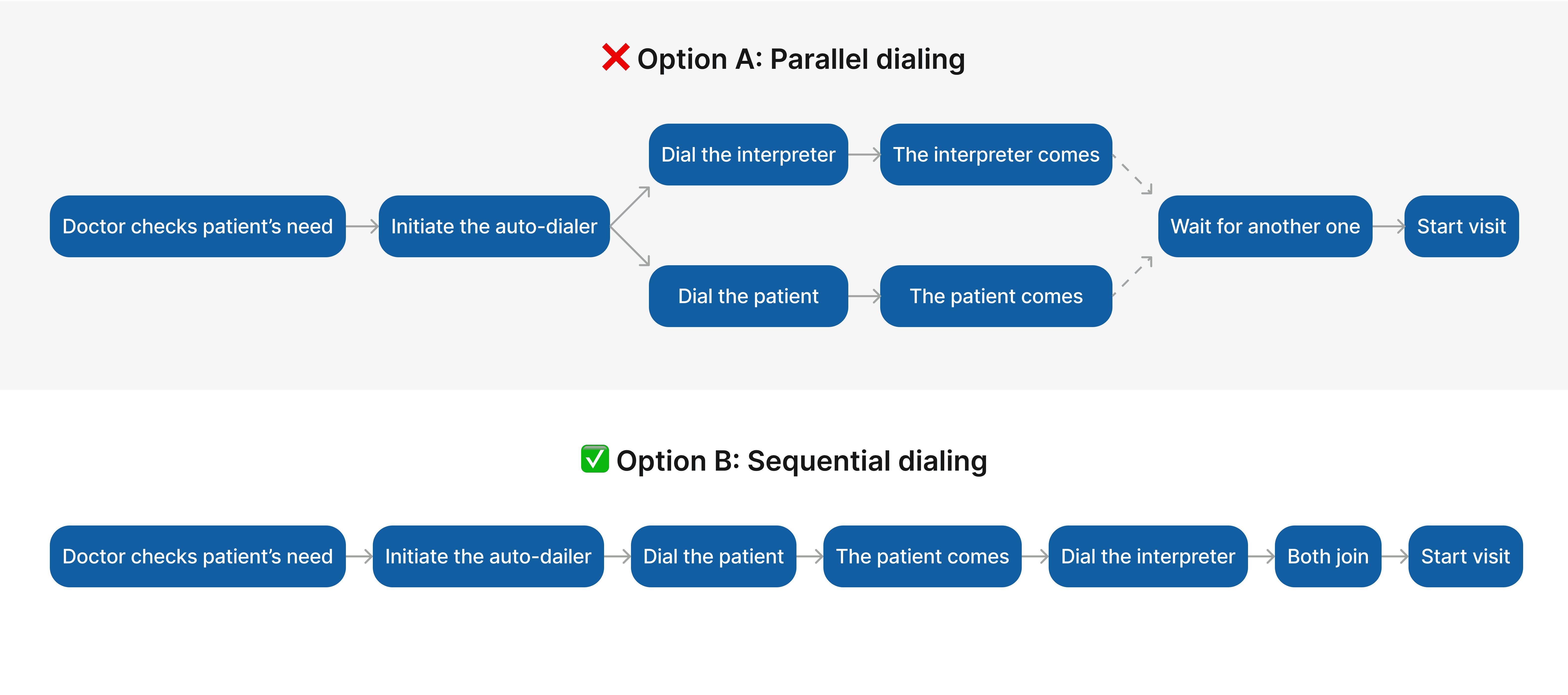
Third-party interpreters bill by the minute the moment they connect. This created a critical conflict: In a standard parallel dialing model, every second an interpreter waited for a patient to answer was direct financial waste.
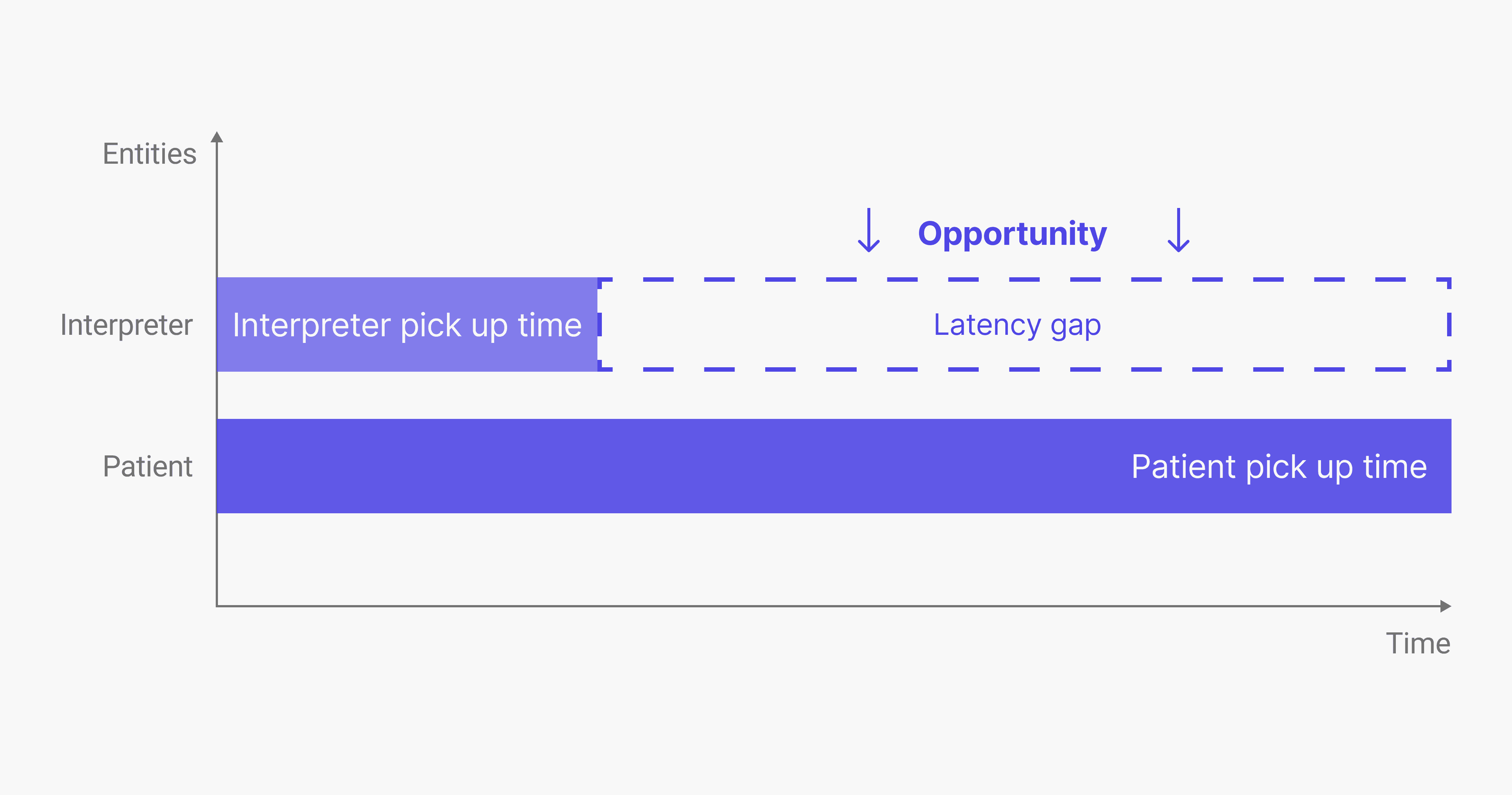
Insight - Latency gap
Data showed a massive asymmetry: Interpreters pick up instantly (<10s), while patients take much longer (45s+). In the old model, paying the interpreter to wait for the patient was costing us significantly.
Strategic unlock
The patient's ring time acts as a "cost-free buffer." Securing them first eliminates billable idle time, while instant interpreter pickup (<10s) ensures a seamless experience.
Pivot - Automated sequence
We replaced the manual switchboard with an intelligent auto-dialer. instead of doctors dialing manually, the system automatically orchestrates the call. We programmed this dialer with a sequential logic: It secures the patient first, and only triggers the billed interpreter once the patient is connected.
solution
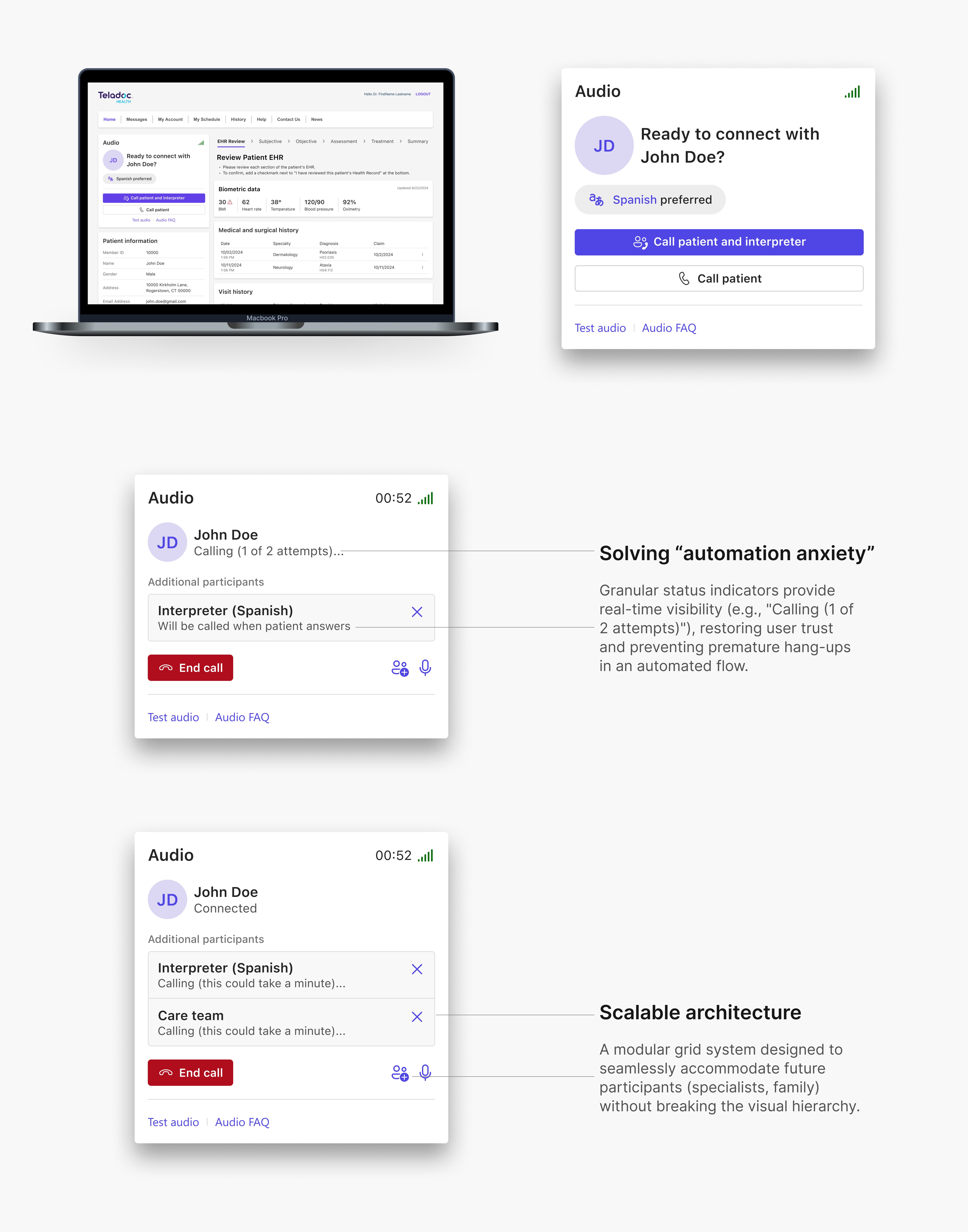
The automated experience
By shifting the burden of coordination from the doctor to the system, we allowed care to take center stage.
impact
Streamlining workflow & Reducing costs
Following the successful handoff to development, our projections indicate a significant boost in operational efficiency. By optimizing the connection sequence, we identified projected impact based on pilot data.
